

Did you know that up to 80% of children who suffer from asthma develop symptoms before turning 5 years old?
The essentials:
What asthma is and why it’s difficult to diagnose in young infants.
What causes it, what the symptoms are, and when to seek a specialist.
Living with asthma: how important is the environment, what does treatment look like, and how to be prepared for attacks?
Asthma is an inflammation of the respiratory tract that makes breathing difficult. It can affect a child’s health from a very young age. However, asthma in infants often looks quite different from asthma in children and adults. For example, one of the common symptoms of asthma in children is wheezing while breathing. In infants, however, wheezing isn’t necessarily present — and conversely, the presence of wheezing doesn’t necessarily mean the infant definitely has asthma.
This makes it harder to diagnose, so parents need to be prepared to recognize the symptoms in order to manage it correctly and react quickly, preventing complications and ensuring the child’s normal development.

Causes of asthma in infants
Scientists cannot say with certainty what the specific causes are for why some infants develop asthma. However, there are risk factors that significantly increase the likelihood of its appearance: family history, smoking (both by the mother during pregnancy and smoking around the baby at an early age), infection, especially in infants under 6 months of age. This is why the causes are divided into genetic and external:
Genetic factors
As with many other chronic conditions, genetics plays a key role in the development of asthma in infants. If one or both parents suffer from asthma, the risk for the child is significantly higher. The same applies to a predisposition to allergies and airway hypersensitivity, which can lead to asthmatic symptoms as early as infancy.
External factors
These are responsible for around 70% of asthma cases in infants. We’ve already mentioned exposure to tobacco smoke starting in the womb, and to that we can add polluted air (especially in urban environments), various allergens such as dust mites, pollen, mold, and respiratory infections.
Young infants have an underdeveloped immune system and are very vulnerable to all these external factors. Excessive exposure to them can trigger inflammation and lead to asthma attacks.
Symptoms of asthma in infants
The first signs of asthma in an infant may be triggered by a respiratory infection. If the baby develops one, you should watch carefully for the presence of subsequent symptoms. In infants, the airways are much smaller compared to an adult, and even a minor inflammation can cause breathing problems.
The most common signs include:
- Difficulty breathing – you may notice that the baby’s tummy moves more than usual, or that the nostrils flare during inhalation.
- Shortness of breath, rapid and shallow breathing, even during normal activities.
- Wheezing or a whistling sound from the lungs.
- Coughing, especially at night or during physical exertion.
- Dizziness, restlessness, difficulty feeding, and difficulty sleeping.
- Frequently occurring respiratory infections.
Not all wheezing, shortness of breath, or coughing are symptoms of asthma. But if you notice them and they are very persistent, not going away even after treatment, you should consult a pediatrician. If your baby has already been diagnosed with asthma and shows persistent symptoms, it’s likely an asthma attack.
Diagnostic methods
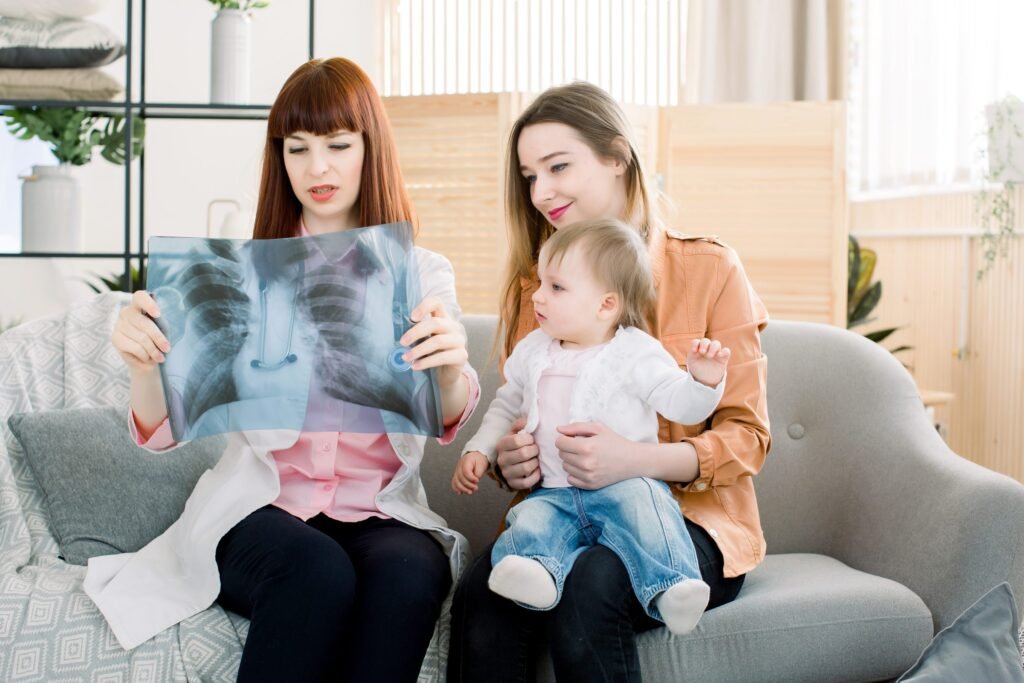
Diagnosing asthma in infants is difficult and requires a careful approach, since standard tests used for adults and older children can’t always be applied. The infant can’t describe their complaints, so parents need to provide the most detailed information possible about the onset of symptoms, how often they recur, reactions to certain foods or changes in environment, exposure to allergens, and family history.
The pediatrician will carry out a detailed examination and gather information about the symptoms and family history. A consultation with a pediatric pulmonologist may also be needed.
Additional tests may include:
- Pulse oximetry to measure blood oxygen levels.
- Chest X-ray to rule out other conditions.
- Allergy tests to identify potential triggers.
How is asthma treated in infants?
The main goal of treatment is not just to relieve symptoms, but also to prevent acute attacks. This may include:
Inhalations using an inhaler or nebulizer
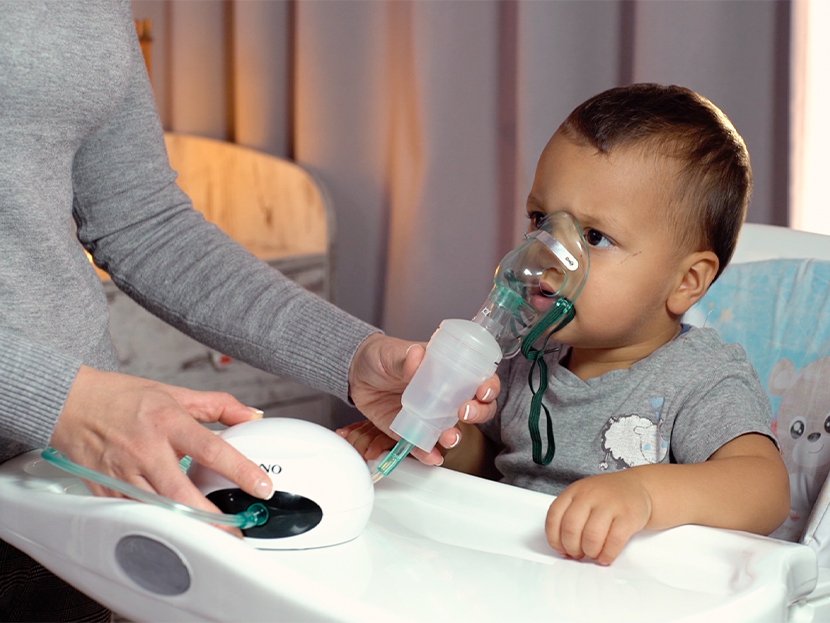
Inhalation therapy is the most commonly used and effective method for relieving asthma symptoms. Through inhalation, medications are delivered directly to the respiratory tract, where they act locally, without putting strain on the rest of the body.
In infants, nebulizers are extremely useful, as they provide deeper and more even inhalation of the medication. This is why having a nebulizer at home is highly recommended, especially in cases of frequent attacks or chronic asthma.
A suitable choice is Zano Inspire, which can be used both at home and on the go, thanks to its small size. The nebulizer is effective and almost silent, which is why it’s a common choice for the youngest patients, who are sometimes more restless during inhalation.
Medications: bronchodilators and inhaled corticosteroids
Asthma medications for infants are prescribed only by a pediatrician or pediatric pulmonologist. The most commonly used medications are:
Bronchodilators – used in acute conditions, they widen the bronchi and relieve attacks of shortness of breath and wheezing.
Inhaled corticosteroids – used as maintenance therapy to suppress chronic inflammation of the airways.
Avoiding irritants
Prevention starts at home. Attention should be paid to:
- Tobacco smoke – even passive smoking is extremely harmful for infants with asthma.
- House dust and mites – regular cleaning and the use of anti-allergy mattress and pillow covers.
- Mold and moisture – keeping the environment dry reduces the risk of mold.
- Pets – animal fur and dander can trigger allergic reactions.
How can parents prevent asthma attacks?
Parental awareness is key to successfully managing asthma in infants. Maintaining a clean home environment with a minimal amount of dust and allergens is a mandatory first step.
Regular medical check-ups are important to monitor the effect of therapy and make any necessary adjustments.
A useful approach is also keeping a symptom diary, in which parents note any worsening, medications given, and possible triggers.
In conclusion
With the right approach and timely therapy, infants and children with asthma can lead a normal and active life. The role of parents is important — from observing the first symptoms, to seeking help from a specialist, to carrying out follow-up therapy.
Small lifestyle changes — such as getting a nebulizer and an air purifier, controlling the environment, and eliminating irritants — can significantly improve a child’s condition and minimize the occurrence of attacks.
Sources:
https://www.healthline.com/health/asthma-in-babies
https://www.baptisthealth.com/blog/allergy–asthma/how-do-babies-get-asthma
https://aafa.org/asthma/living-with-asthma/asthma-in-infants/